


The latissimus dorsi1 enables a variety of upper-body movements. Any time you reach your arms overhead, whether you’re placing something on a high shelf or exploding into an Olympic clean and jerk, you’re engaging your lats. Well-defined lat muscles can contribute to the bodybuilder “X-frame” physique and classic athletic “V-taper,” so they’re important for aesthetic reasons, too.
The lats are where it’s at, but how can you target them during your back workouts?
The lat pulldown exercise is popular, but it takes more than a single exercise to fully work these muscles. That’s why we’re sharing eight of our favorite dumbbell lat exercises that you can perform with minimal equipment from just about anywhere. You don’t need to buy any extra gear, either, since a good back workout with dumbbells can provide all of the back training you need.
In this guide, Caine Wilkes, OLY, CNC, USAW-L1, shares step-by-step instructions for performing these lat-specific dumbbell exercises with proper form, along with some benefits of using dumbbells to build your lats, and much more. Lats get into it!
8 Best Dumbbell Lat Exercises at a Glance
- Bent-Over Dumbbell Row: Large range of motion, packs on muscle
- Single-Arm Dumbbell Row: Unilateral exercise for muscular balance and core strength
- Dumbbell Deadlift: Great for the glutes, hamstrings, and back muscles
- Kroc Row: Best for moving serious weight
- Renegade Row: Challenges your core, shoulder stability, and lats
- Dumbbell Lat Pullover: A big stretch for bigger gains
- Seal Row: Stabilizes your torso to isolate the lats
- Incline Dumbbell Row: A great chest-supported row with minimal equipment
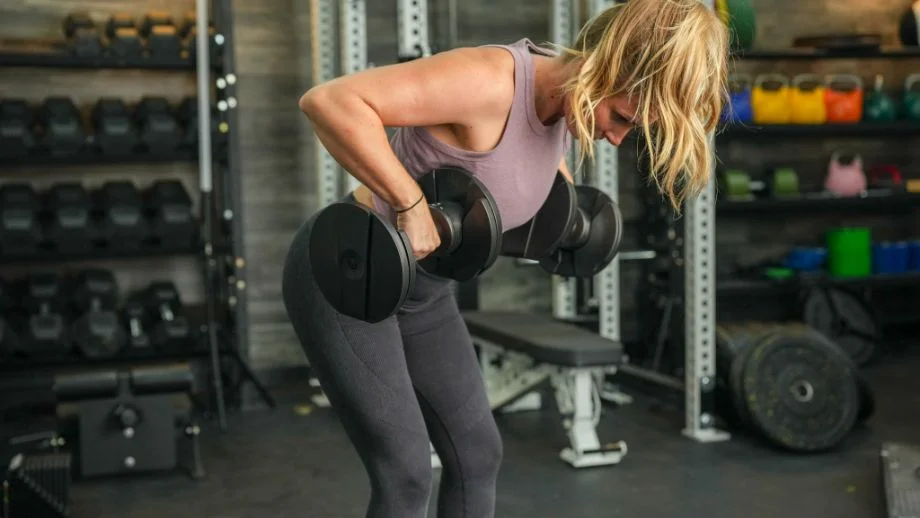
Bent-Over Dumbbell Row
Muscles worked: Latissimus dorsi, trapezius, rhomboids, posterior deltoids
Benefits: “The bent-over barbell row provides significant muscle activation to various upper-body muscle groups, making it one of the best back exercises,” says Caine Wilkes, OLY, USAW-L1. “The dumbbell version offers additional upside by featuring a greater range of motion than its barbell counterpart.”
How to do it:
- Stand holding your dumbbells with a neutral grip (palms facing each other) and your feet shoulder-width apart. Hinge forward at your hips, tilting your torso 45 degrees forward.
- Bend your elbows as you pull the dumbbells into your body.
- Continue until your elbows are fully bent.
- Pinch your shoulder blades together and squeeze your back muscles.
- Slowly lower the dumbbells back to the starting position.
- Repeat for reps.

Main mistake to avoid: You should avoid rounding your back during dumbbell rows, as this can irritate your lower back and increase your risk of injury.
Single-Arm Dumbbell Row
Muscles worked: Latissimus dorsi, trapezius, rhomboids, posterior deltoids, core
Benefits: Performing your dumbbell rows with one arm at a time can take this unilateral exercise to the next level. How? By allowing you to truly exhaust each side properly.
Also, you’re only loading one side per set, so you’ll get some anti-rotation core activation as you engage your core to combat your body’s natural inclination to rotate toward the weight.
How to do it:
- Stand with a dumbbell in your left hand and a flat bench on your right side.
- Place your right hand and right knee on the bench, angling your upper body forward. Keep your left arm fully extended, your back straight, and your eyes gazing forward.
- Engage your lats and bend your left elbow to pull the dumbbell into your body.
- Continue until your elbow is fully bent.
- Squeeze the contraction, then slowly lower the dumbbell back down.
- Repeat for the desired number of repetitions, then switch sides and repeat.

Main mistake to avoid: Since this is a unilateral exercise, you should avoid starting with your stronger arm and trying to match the reps with your weaker arm. If you begin with your stronger arm, you’re more likely to allow your form to break down as you work to complete the exercise.
Dumbbell Deadlift
Muscles worked: Glutes, hamstrings, latissimus dorsi, trapezius, erector spinae
Benefits: The deadlift offers unparalleled gains in strength and hypertrophy, but that’s not all.
According to the Journal of Sport Rehabilitation2, “Exercise programs that include deadlifts are a clinically effective option for the treatment of low back pain.” Additionally, the deadlift, according to the Journal of Strength and Conditioning Research3, “Can be added to warm-up routines to maintain or even enhance acute physical performance.”
How to do it:
- Stand with your feet shoulder-width apart with two dumbbells on the floor at your sides.
- Bend your knees, push your hips back, and hinge forward to reach down and grip the dumbbells. You may use a neutral or overhand grip.
- Drive through your heels, extend your knees, and bring your hips forward to stand.
- Continue until your hips reach full extension.
- Squeeze your glutes, then reverse the movement to return the weights to the floor.
- Repeat for reps.
Main mistake to avoid: When performing a dumbbell deadlift, be sure to keep the weights close to your body, and avoid letting them drift too far forward, which can increase the strain on your lower back.
Kroc Row
Muscles worked: Latissimus dorsi, trapezius, rhomboids, posterior deltoids, core
Benefits: The Kroc row was developed and popularized by champion powerlifter Janae Marie Kroczaleski, who once rowed 300-pound dumbbells with this very technique.
While the single-arm dumbbell row involves strict form, the Kroc row allows for some momentum to move significantly heavier weights.
How to do it:
- Stand in a staggered stance with your left foot forward, left knee slightly bent, right leg extended behind you, and a heavy dumbbell held in your right hand.
- Hinge forward at the hips and rest your left hand on the back of an incline bench.
- Initiate your rowing movement by using a little hip drive, then follow through by engaging the upper-back muscles and flexing your elbow.
- Continue until your elbows are fully bent.
- Lower the weight with control, fully straightening your arm at the end of the movement.
- Repeat for reps.

Main mistake to avoid: Like other bent-over rows, you should avoid excessive rounding of the back. A little side-to-side momentum is okay, but be sure to brace your core to help protect your lower back.
Renegade Row
Muscles worked: Latissimus dorsi, rhomboids, biceps, triceps, core
Benefits: “Rowing a dumbbell while holding a plank position provides muscle activation throughout your entire body,” says Caine. “That said, you’ll especially feel it in your lats, making it a great way to maximize strength gain and muscle growth for this muscle group.”
How to do it:
- Start in the quadruped (“all fours”) position with a pair of dumbbells on the floor. (We recommend hex dumbbells, because they won’t roll as much.)
- Step your feet back into a push-up position with your hands shoulder-width apart.
- Grip your dumbbells using a neutral grip and widen your feet for more stability.
- Squeeze your glutes, engage your core, and row the right dumbbell into your body.
- Lower the dumbbell back to the floor, then row the left dumbbell into your body.
- Alternate sides on each rep until your set is complete.

Main mistake to avoid: When performing renegade rows, the biggest mistake is using too much momentum, rather than bracing your core and trying to let your lats do the majority of the work.
Dumbbell Lat Pullover
Muscles worked: Pectorals, latissimus dorsi, teres major, triceps, rear delts
Benefits: “The dumbbell pullover is one of few exercises that works muscle groups in your chest and back simultaneously, making it one of the best for building muscle and upper-body strength,” says Caine. “Its unique movement pattern promotes greater overhead mobility and flexibility, as well.”
How to do it:
- Lie on a flat weight bench with your knees bent at 90 degrees and your feet planted.
- Hold a dumbbell with both hands over your chest. Your arms should be fully extended, other than a slight bend in your elbows.
- Slowly lower your upper arms behind your head, keeping your elbows pointed forward.
- Pause at the bottom, then reverse the movement to bring the dumbbell back up.
- Repeat for reps.

Main mistake to avoid: Dumbbell lat pullovers are a great exercise to stretch the lats and improve your range of motion, but it’s important to control the movement. Going too heavy can make it difficult to control as you lower the the dumbbell, which can increase the risk of shoulder injury.
Seal Row
Muscles worked: Latissimus dorsi, trapezius, posterior delts
Benefits: The seal row is one of the best lat exercises you can incorporate into your back strength training, and it all boils down to one thing: isolation.
Because the positioning requires you to lift your legs off the floor, you can’t inadvertently use the lower body to cheat reps, leaving all that juicy activation for your latissimus dorsi muscles to feast upon.
How to do it:
- Lie prone (face down) on a bench holding a dumbbell in each hand.
- Engage your lats and bend your elbows to pull the weights into your body.
- Pause, squeeze your back muscles, then slowly lower the weights back down.
- Repeat for reps.

Main mistake to avoid: The seal row can be a great lat workout, but if you try to use momentum and lift your chest off the bench, you’ll likely end up over-arching your lower back, which can cause irritation.
Incline Dumbbell Row
Muscles worked: Latissimus dorsi, trapezius, posterior delts
Benefits: The seal row isn’t the only row variation that can stabilize your posture; the incline dumbbell row uses the same concept, but to a slightly lesser degree. Also, because your chest is being supported by the incline bench, you can really isolate and properly exhaust your lat muscles for maximum muscle mass gains.
How to do it:
- Set an incline bench between 20 and 40 degrees.
- Grab a dumbbell in each hand and sit with your chest pressed against the seatback.
- Engage your lats and pull the dumbbells into your body, leading with your elbows.
- Continue until your shoulder blades are pinched and your elbows are fully flexed.
- Squeeze the contraction, then slowly guide your dumbbells back to the starting position.
- Repeat for reps.

Main mistake to avoid: When performing this chest-supported row variation, be sure to avoid lifting your chest off the bench and using momentum to complete each rep.
3 Dumbbell Lat Workouts to Try Today
We’ve covered some of the best dumbbell lat exercises; now, it’s time to program them into an actionable workout routine you can use to make progress toward your personal fitness goals.
Check out our sample dumbbell lat workouts below!
Equipment Needed
Each of the dumbbell lat workouts below only require a set of dumbbells and an adjustable bench. Here’s what the GGR team recommends:
- REP Fitness Rubber-Coated Hex Dumbbells: We recommend something durable enough to withstand occasional drops, as certain exercises, like chest-supported rows, require you to drop your weights to stand up. The REP Fitness Rubber-Coated Hex Dumbbells are extremely durable, available in a wide range of weight options, and include free shipping.
- Titan Fitness Titan Series Adjustable Weight Bench: An adjustable weight bench allows you to perform rows and lat pullovers at a variety of angles, offering more versatility than a flat bench. We love that this Titan bench features a zero-gap design, along with a 1,000-pound weight capacity when flat—it’s one of the most durable adjustable benches we’ve tested.
Dumbbell Lat Workout for Beginners
As they say, you have to learn to walk before you can run. That’s especially true in the fitness world; pushing your limits without first establishing a strong foundation may result in injury.
“Our beginner workout involves a moderate set and rep scheme, light weights, and plenty of rest between each set,” says Caine Wilkes, OLY, USAW-L1. “Take as much time as you need between sets to make sure you’re giving 100% on each rep and lifting with proper form at all times.”
Begin your workout with a warm-up, including upper-body stretches, calisthenics, and thoracic mobility exercises.
| Exercise | Sets | Reps |
| Single-Arm Dumbbell Row | 2-3 | 6-8 |
| Dumbbell Deadlift | 2-3 | 6-8 |
| Dumbbell Lat Pullover | 2-3 | 6-8 |
| Incline Dumbbell Row | 2-3 | 6-8 |
Dumbbell Lat Workout for Strength
“Lifters with more experience may consider adopting a more aggressive program,” says Caine. “To prioritize strength gains, you’ll lift heavy weights using a low set and rep scheme. You’ll also use more advanced dumbbell lat exercises, including the Kroc and seal rows.”
| Exercise | Sets | Reps |
| Kroc Row | 2-3 | 3-6 |
| Dumbbell Deadlift | 2-3 | 3-6 |
| Renegade Row | 2-3 | 6-12 |
| Dumbbell Lat Pullover | 2-3 | 3-6 |
| Seal Row | 2-3 | 3-6 |
Dumbbell Lat Workout for Hypertrophy
“If you’re a bodybuilder or simply interested in prioritizing building muscle mass, you’ll need to shift gears, again,” says Caine. “Choose somewhere between 60% and 75% of your one-rep max weight and do a moderate number of sets and reps.”

Make sure you really take your time on these reps and squeeze that contraction to fully maximize your gains.
| Exercise | Sets | Reps |
| Single-Arm Dumbbell Row | 3-6 | 6-12 |
| Dumbbell Lat Pullover | 3-6 | 6-12 |
| Incline Dumbbell Row | 3-6 | 6-12 |
| Renegade Row | 3-6 | 6-12 |
What Muscles Make Up the Lats?
While some back muscles are subdivided into smaller muscles that can be isolated and strengthened individually, the latissimus dorsi are two single muscles that run bilaterally down the length of the spine.
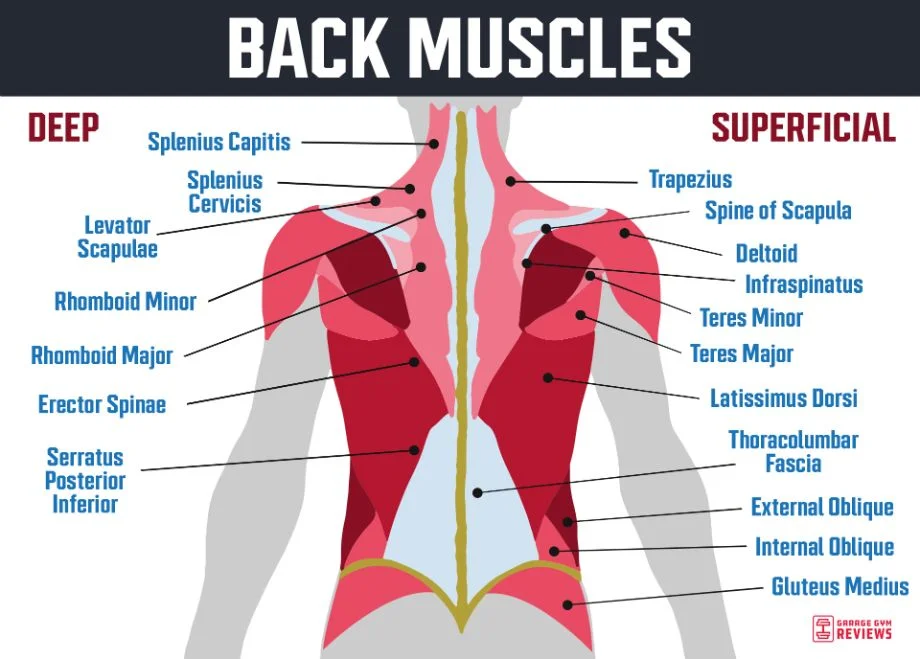
Based on sheer size, you can emphasize certain regions, depending on the type of movement you’re performing. Those regions are as follows:
- Upper lats: To target the region of your lats located in your upper back, rowing your dumbbells into the sternum may be most effective. Performing pull-ups using a wide grip may be effective, as well.
- Middle lats: The mid lats are the widest and most predominant portion of the lat muscles. To emphasize this region, perform your rows at the standard height, roughly located between the sternum and belly button.
- Lower lats: Situated in the lower back, you’ll have the most luck hitting this region by emphasizing lower lat exercises that involve rowing your dumbbells toward your hips. Wide-grip lat pulldowns may be effective, too.
Remember—you can shift the emphasis slightly by making some adjustments to your form and establishing a strong mind-muscle connection with your lats, but you can’t really target the part of your lats you want to target the same way you could during other forms of isolation training because the lats are singular muscles.
However, varying your movement pattern and grip may be beneficial for altering the stimulus, preventing plateaus, and staving off boredom, thus making it worthwhile.
Benefits of Dumbbell Lat Exercises
Working out your lats can provide plenty of garden-variety fitness gains, including greater upper-body strength, enhanced hypertrophy, as well as improved overhead mobility and flexibility. But what benefits do you get from using dumbbells, specifically?
Uses a Full Range of Motion
We love barbells, but the fact of the matter is that you’re working with a comparatively smaller range of motion (ROM) if you choose a barbell over dumbbells. This is especially obvious when you’re doing barbell rows, as that big ol’ bar may smack into your sternum, whereas dumbbells would let you really retract your shoulder blades and get a stronger contraction.
According to SAGE Open Medicine4, “Training with a full ROM produces similar or greater increases in muscle size than training with partial ROM.” As such, dumbbells have a clear advantage over barbells in this regard.
Helps Correct Muscle Imbalances
Bilateral exercises like the barbell row, bench press, and deadlift serve as the cornerstones of many strength training programs. However, doing only bilateral movements comes at a cost: bilateral strength deficits and muscle imbalances.
One of the best ways of correcting these imbalances is by grabbing a pair of dumbbells and working in a few sets of unilateral exercises, including single-arm dumbbell rows, renegade rows, and more.
They’re Convenient
Sure, cable rows and lat pulldowns can work wonders for the strength and size of your lats, but not everyone has access to those machines. That’s where dumbbells and dumbbell lat exercises can truly shine.
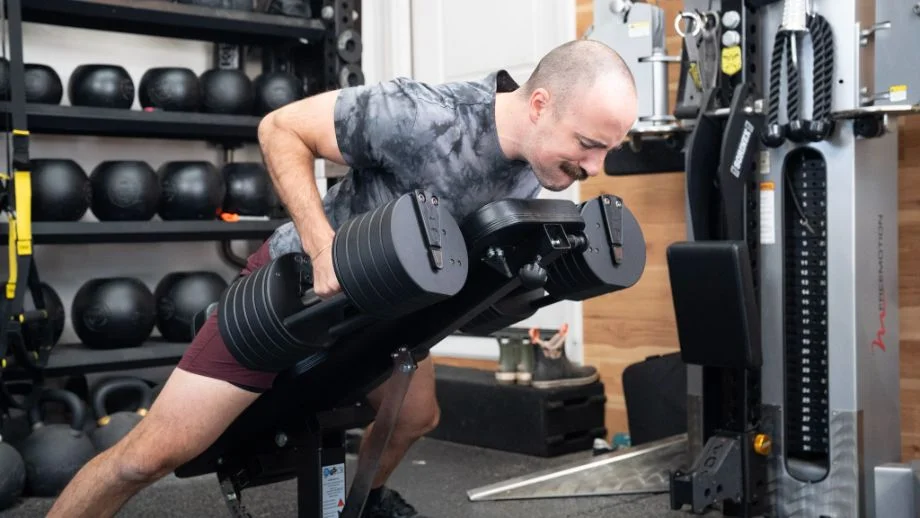
It doesn’t matter if you only have a broom closet to call a home gym; purchasing a pair of the best dumbbells is relatively inexpensive and can enable you to perform a wide variety of highly effective exercises from the comfort of your home gym or garage.
We love lat pulldown machines, but dumbbells are typically much more affordable and offer better versatility.
Dumbbell Lat Exercises: Final Thoughts
Training your latissimus dorsi muscles can increase your upper-body strength, contribute to a powerful physique, improve overhead mobility, and can even support other important bodily functions.
There are many ways to target and strengthen these back muscles, but dumbbell lat exercises are among the best because they allow for a greater range of motion than barbells, can correct muscle imbalances, and offer unparalleled convenience.
So, the next time you want to hit your lats during your weekly back workout, grab a pair of dumbbells and give these exercises a try!
Dumbbell Lat Exercises: FAQs
How do I work my lats with dumbbells?
Most dumbbell lat exercises are row variations, such as the bent-over dumbbell row, single-arm dumbbell row, Kroc row, renegade row, seal row, and incline row. Dumbbell deadlifts and dumbbell lat pullovers can also provide activation to the latissimus dorsi.
What is the most effective lat exercise?
According to the Journal of Electromyography and Kinesiology5, “There is little agreement as to which exercise is the most effective for activating the latissimus dorsi.” That said, some of our picks for the best lat exercises include the pull-up, bent-over row, inverted row, lat pulldown, and dumbbell lat pullover.
Can you train lats without equipment?
Yes, you can train yoour lat muscles without equipment. The best bodyweight exercises for hitting the lats include the wide-hand push-up, handstand push-up, and scapular push-up.
Many lat-focused exercises only require minimal equipment, as well. For example, dumbbells, pull-up bars, and resistance bands are all relatively inexpensive, and keeping them in your home gym opens a whole new world of possibilities.
So, do yourself a favor and purchase these home gym essentials. You’ll be glad you did.
References
- Jeno SH, Varacallo M. Anatomy, Back, Latissimus Dorsi. [Updated 2023 Mar 5]. In: StatPearls [Internet]. Treasure Island (FL): StatPearls Publishing; 2024 Jan
- Fischer SC, Calley DQ, Hollman JH. Effect of an Exercise Program That Includes Deadlifts on Low Back Pain. J Sport Rehabil. 2021;30(4):672-675. Published 2021 Feb 24. doi:10.1123/jsr.2020-0324
- Abade E, Brito J, Gonçalves B, Saura L, Coutinho D, Sampaio J. Using Deadlifts as a Postactivation Performance Enhancement Strategy in Warm-ups in Football. J Strength Cond Res. 2023;37(9):1821-1827. doi:10.1519/JSC.0000000000004485
- Schoenfeld BJ, Grgic J. Effects of range of motion on muscle development during resistance training interventions: A systematic review. SAGE Open Med. 2020;8:2050312120901559. Published 2020 Jan 21. doi:10.1177/2050312120901559
- Park SY, Yoo WG, An DH, Oh JS, Lee JH, Choi BR. Comparison of isometric exercises for activating latissimus dorsi against the upper body weight. J Electromyogr Kinesiol. 2015;25(1):47-52. doi:10.1016/j.jelekin.2014.09.001